Coconut Grove is not like the rest of Miami. It moves a little slower, sits a little closer to the water, and feels — in the best possible way — like it has been here longer than everything around it. The streets are canopied and winding. The homes are set back from the road. The light comes in differently here, filtered through old-growth trees rather than bouncing off glass and concrete. For homeowners, that character is exactly the draw. And for interior designers, it shapes everything about how a project comes together.
Why Coconut Grove Homes Require a Different Design Approach
The Grove is one of Miami's oldest neighborhoods, and that history shows up in the architecture. You will find Mediterranean Revival homes with thick walls and arched doorways. Mid-century modern houses with flat roofs and clerestory windows. And newer contemporary builds that try — with varying success — to sit quietly within a very green, very established landscape. What these homes share, regardless of era or style, is a particular relationship with the outdoors. Coconut Grove does not feel like a neighborhood you live inside of. It feels like one you live in and around, and that distinction matters enormously.
Indoor-Outdoor Living as a Design Foundation
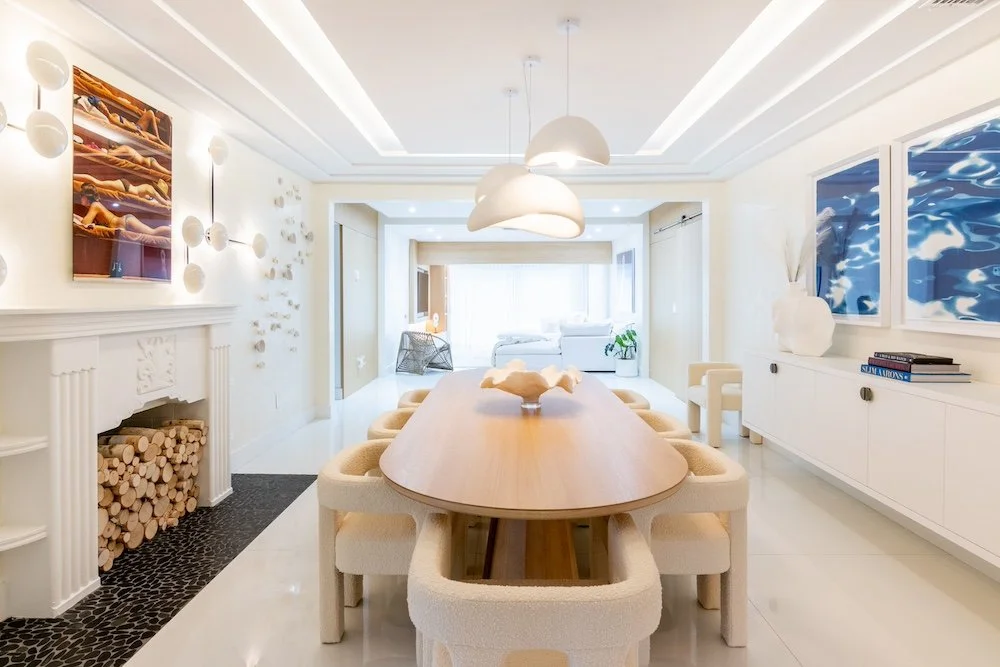
In most Miami neighborhoods, indoor-outdoor living is something you design toward. In Coconut Grove, it tends to already be built into the bones of the home. Covered terraces, screened lanais, interior rooms that open directly onto gardens or courtyards. The boundary between inside and outside is meant to be crossed regularly.
Coconut Grove homes vary widely in scale — some generous, some compact and tucked between larger properties on shaded streets. What they tend to share is a closer relationship to the outdoors than you find in a high-rise or newer development. Designing those transitions well is one of the most underestimated parts of working on a Grove home.
This means thinking carefully about how materials, furniture scale, and color palette carry across the threshold from inside to out. Flooring choices become more complex. Furniture needs to account for humidity, light exposure, and airflow. The goal is for the interior to feel like a natural extension of the landscape, not a separate world sealed off from it. That is a different kind of problem to solve, and it requires a designer who thinks about the home as a whole rather than room by room.
Natural Light and How It Behaves Here
One of the first things you notice inside a Coconut Grove home is the light. It is softer and more filtered than in Miami's more exposed neighborhoods. Changing how colors read, how materials appear at different times of day, and how warm or cool a space feels.
Paint colors that look crisp and bright in a north-facing Brickell apartment can feel muddy and flat in a Grove home surrounded by tree canopy. Fabrics that feel appropriately light in full sun can feel heavy and dark in a room where the light shifts constantly throughout the day. Understanding how a specific home receives and filters light — at different hours, in different seasons — is something that needs to be assessed in person. Not assumed from a mood board.
Window treatments also behave differently in this context. In a high-rise, the goal is often to manage direct sun or preserve a view. In a Coconut Grove home, it is more often about layering. Sheers that allow dappled light through while maintaining privacy. Heavier panels that can close off a room completely when needed. The effect is less about control and more about atmosphere.
Bringing the Outside In — Without Overdoing It
There is a temptation, when designing a home in a lush neighborhood like the Grove, to lean heavily into natural materials and botanically inspired interiors. Rattan, jute, lots of greenery, earthy tones. And while those elements can work beautifully here, they are not a formula — and they are certainly not the only option.
The more considered approach is to let the landscape do its own work, visible through windows and open doors, and design the interior on its own terms. What that looks like will depend entirely on the home.
What tends to work well in Coconut Grove is taking the time to understand what the home is actually asking for before deciding on a direction. An older Mediterranean home with terrazzo floors and arched doorways calls for a different response than a newly built contemporary with clean lines and floor-to-ceiling glass. Both exist in the Grove, often on the same street.
What stays consistent across both is the value of thinking through the indoor-outdoor relationship carefully, and respecting whatever architectural character is already present. The materials, palette, and furniture style that follow from that will look different every time.
Working With an Older Home's Architecture
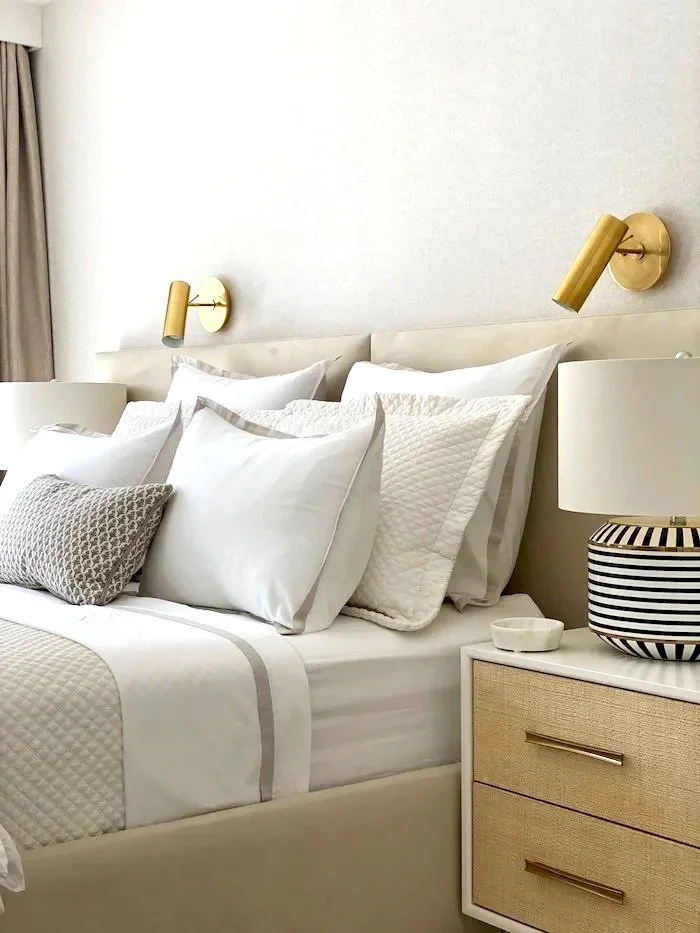
Many of the most desirable homes in Coconut Grove are not new builds. They have original tile work, arched openings, terrazzo floors, exposed beams, or ceiling heights that a developer would not replicate today. These are assets, not limitations. But they do require a designer who knows when to lean into them and when to let them recede.
Terrazzo floors, for example, are having a genuine design moment. But they also set a very specific tone for the rest of the room. The furniture, textiles, and lighting choices around them need to respond to what is already there, not compete with it. The same applies to arched doorways, original molding, or a fireplace that anchors a living room.
Designing within a home that has history means working in dialogue with the architecture rather than imposing something on top of it. That takes more time and more thought — and it is some of the most rewarding design work there is.
Common Questions About Interior Design in Coconut Grove
What interior design style works best in a Coconut Grove home? There is no single answer, because the homes here span several architectural styles. What tends to work across all of them is a warm, layered approach that respects the home's existing character and responds to the neighborhood's relationship with the natural environment. Whether the home is Mediterranean, mid-century, or contemporary, the goal is for the interior to feel considered and livable.
Does the indoor-outdoor lifestyle in Coconut Grove affect material and furniture choices? Significantly. Humidity, filtered light, and the physical connection between indoor and outdoor spaces all influence what materials hold up, how colors appear, and how furniture needs to be scaled and positioned. Working with a designer familiar with Miami's climate — and with homes that genuinely open to the outdoors — makes a meaningful difference in how the finished space performs over time.
Is interior design in Coconut Grove different from other Miami neighborhoods? In approach, yes. The Grove's older housing stock, mature landscaping, and strong indoor-outdoor orientation create a set of design considerations that are distinct from, say, a Brickell high-rise or a new-build in Pinecrest. The neighborhood has its own pace and character, and the best interiors here reflect that rather than work against it.
Thinking About Revamping you Home in Coconut Grove?
At Eskae Interiors, we are drawn to homes with character. Sspaces that have history, or a strong relationship with the landscape, or a set of design challenges that require genuine thought to resolve. Coconut Grove has all of that in abundance. If you are considering a design project in the Grove and want to talk through what the process might look like for your home, we would love to hear about it. Start the conversation here, and lets chat about your vision and the possibilities.