Miami condo living comes with a lot of advantages. What it also comes with is a specific set of design challenges that most homeowners do not fully anticipate until they are in the middle of them. The square footage is different, the rules are different, and the design challenges are different. But that does not mean the result has to be any less considered or beautiful.
At Eskae Interiors, a significant portion of the homes we work in are condos — from Brickell high-rises to South Beach residences with older floor plans and a lot of character. Each one comes with its own set of constraints. Navigating those constraints with clarity and intention is a big part of what full-service condo interior design involves. Here is what you can expect from working with a professional.
What Makes Condo Interior Design Different?
Condos are not just smaller homes. They operate within a different set of rules, both physically and administratively. A good designer will account for all of them before a single finish is selected or a piece of furniture is sourced. The most common factors that shape a condo design project include:
Fixed layouts that cannot easily be reconfigured
Building management and HOA approval requirements
Freight and elevator logistics for deliveries
Noise and work-hour restrictions for tradespeople
No-modification zones that affect what structural or systems-related changes are possible.
These are not obstacles; they are just the parameters of the project. Understanding them early is what allows the design process to move forward with confidence rather than surprises.
Navigating Building Approvals and HOA Guidelines
One of the first questions homeowners ask is: do I need approval from my building before I can start? In most Miami condo buildings, the answer is yes — at least for anything beyond cosmetic changes.
Many buildings in Brickell, Edgewater, and the Downtown Miami corridor have specific requirements around flooring materials (impact ratings for hard floors are common), permitted work hours for contractors, elevator reservations for deliveries, and any modifications that touch shared systems like plumbing or electrical. Some buildings also require that certain licensed trades are used, or that work is submitted for review before it begins.
At Eskae Interiors, we are familiar with navigating these processes and factor them into the project timeline from the start. We help gather the documentation needed, coordinate with building management when required, and make sure all material selections meet the building's specifications. Because no one wants to be scrambling at the last minute to replace a flooring choice that did not pass review. Bringing your designer in early, before decisions are finalized, is one of the most effective ways to avoid that kind of setback.
Designing Within a Fixed Layout
Unlike a house, most condo layouts are not easily reconfigured. Walls are often structural or shared, and moving plumbing or electrical is rarely simple . This means the design process focuses heavily on how to make the existing layout work as well as possible. Through elements like furniture placement, scale, circulation flow, and light.
This is where an interior designer with experience in condos makes a difference. In some cases, small layout changes are possible without touching walls: swapping the function of two rooms, rethinking how a space is divided, or repositioning furniture to dramatically improve the way a home feels to move through. In others, the work is about making every square foot feel purposeful.
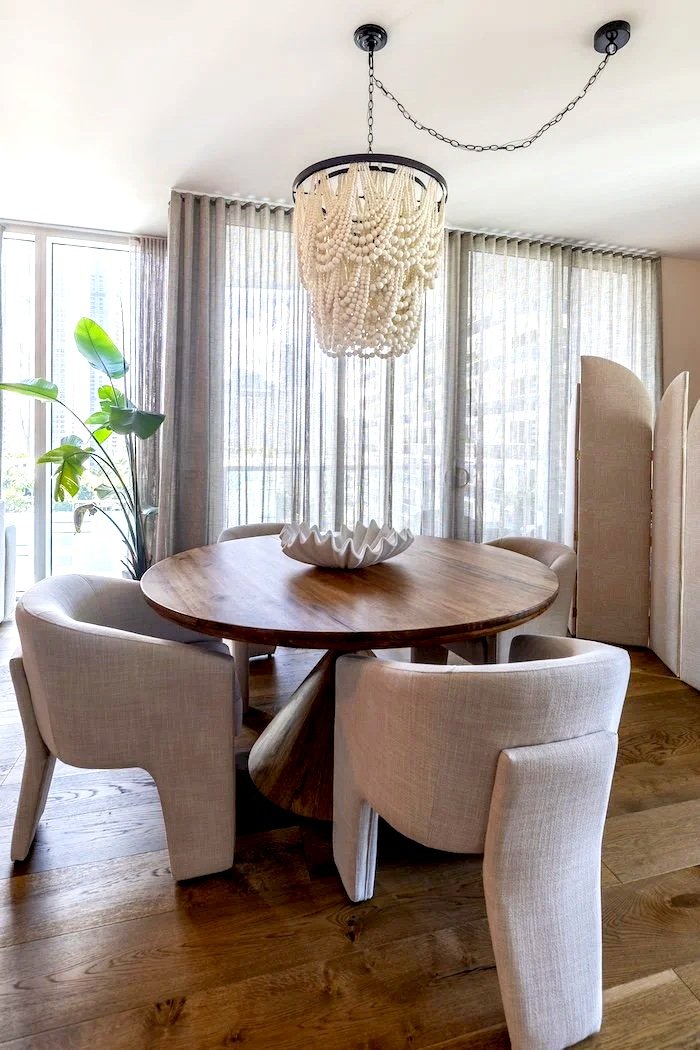
In a recent Edgewater project, the homeowner wanted to flip her dining and living room layouts entirely to better support the way she lived and entertained. The structural elements stayed in place, but rethinking the arrangement changed everything about how the home felt. A swag-style chandelier turned a lighting limitation — no junction box in the right location — into a design feature. You can read more about that transformation in our Biscayne Bay condo case study.
Scale, Proportion, and the Small Luxury Condo
One of the most common misconceptions about small luxury condo interior design is that you simply need smaller furniture. In reality, scale is more nuanced than that. A room furnished entirely with small-scale pieces can feel timid and disconnected. The goal is balance. Anchoring the space with appropriately scaled key pieces while keeping the room from feeling crowded or closed in.
In a condo, this often means choosing furniture with legs to create visual lift and openness. Using fewer and more intentional pieces rather than filling every surface. Hanging drapery high to draw the eye upward and make ceilings feel taller. Selecting rugs large enough to properly ground a seating area. And sourcing custom or semi-custom pieces built to the exact dimensions of a room. Luxury condo interior design is not about fitting in as much as possible. It is about selecting the right things and placing them with purpose.
Custom Solutions for Odd Window Configurations
Miami condo windows are often dramatic — floor-to-ceiling glass, angled walls, V-shaped corner windows, transom windows above sliding doors. They are one of the best features of high-rise living, and also one of the trickier design challenges.
Standard off-the-shelf window treatments rarely work in architecturally complex condos. The angles are wrong, the proportions do not fit, and the result tends to look improvised. Custom window treatments, designed specifically for the window's exact dimensions and shape, are often the only way to get it right.
Beyond aesthetics, window treatments in a Miami condo also need to address some practical realities: light control without sacrificing a view, true blackout for bedrooms in east- or west-facing units, heat gain and UV protection in glass-heavy buildings. And fabric choices that add softness without competing with what is outside the window. Getting this right has an outsized effect on how a space feels at every time of day. Which is why it tends to be one of the most impactful decisions in any condo project.
Condo Interior Design Across Miami's Neighborhoods
While the fundamentals of condo design apply everywhere, each Miami neighborhood brings its own character to the process.
Brickell
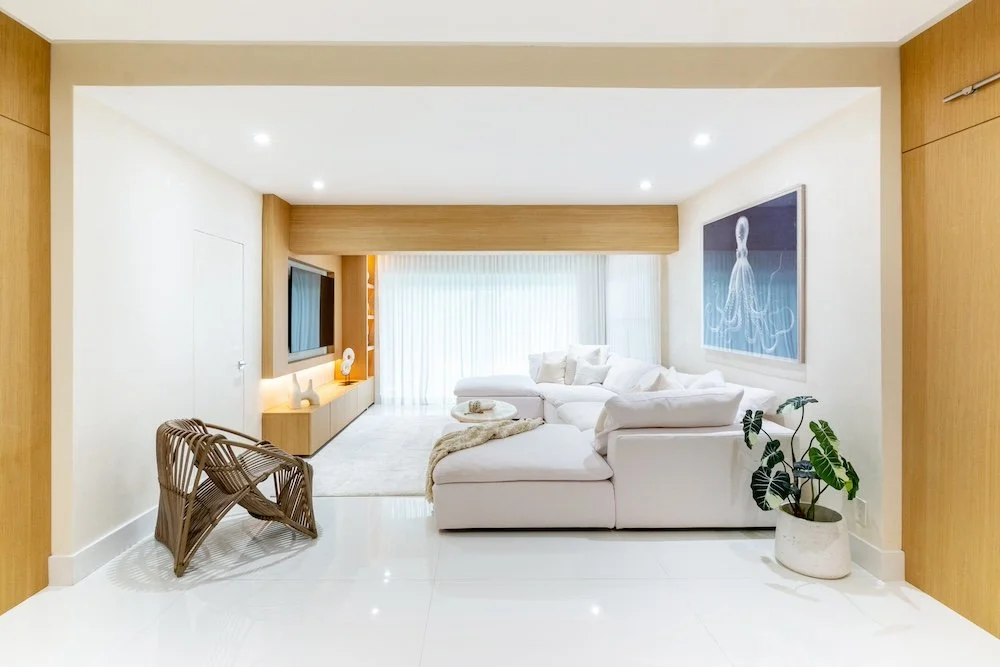
Brickell interior design tends to reflect the neighborhood's energy — polished, urban, and contemporary. Many buildings here are newer construction with open-plan layouts, high ceilings, and expansive city or bay views. The design challenge is often about adding warmth and personality to a space that can feel generic straight out of the developer's hands. Layering texture, curating art, and investing in custom elements goes a long way in a Brickell high-rise.
Edgewater
Edgewater Miami design projects frequently center on the views. Units in this neighborhood often look directly out over Biscayne Bay, and preserving that sightline while creating a warm, livable interior is the central design consideration. The architecture tends to be bold with unusual window shapes and angular floor plans. Which is exactly why custom solutions matter here more than anywhere else.
South Beach
South Beach condos range from Art Deco-era buildings with charming quirks. Lower ceilings, smaller rooms, lots of architectural detail. To newer luxury developments with a more contemporary feel. Design in SoBe often means working with history, knowing which existing elements to celebrate and which to quietly update. You can see how we approach spaces like these in our South Beach portfolio.
Common Questions About Condo Interior Design in Miami
Do I need HOA or building approval before starting an interior design project in my Miami condo? It depends on the scope. Cosmetic changes — paint, furniture, soft furnishings — typically do not require approval. But anything involving flooring, lighting modifications, plumbing, or structural changes usually does. Most buildings have a formal review process, and it is worth understanding those requirements before decisions are made.
Can a condo feel as elevated and personal as a single-family home? Absolutely. Square footage does not determine how a home feels. Intention does. With the right furniture, lighting, custom elements, and layering, a condo can feel just as refined and personal as any house. The approach is different, but the quality of the result does not have to be.
How long does a condo interior design project typically take in Miami? It varies with scope. A focused decorating refresh might take a few months. A full-scope project involving custom furniture, building approvals, and multiple rooms can take six to twelve months or more. Establishing a realistic timeline early is one of the most useful things a full-service designer brings to the process. And it’s as easy as booking a consultation!
What should I look for in a luxury condo interior designer in Miami? Look for a designer with genuine experience working inside condo buildings. Someone who understands approval processes, delivery logistics, and the spatial constraints of high-rise living. A strong portfolio of condo work, a clear and guided process, and honest communication about timelines and scope are all good signs.
Ready to Start Your Condo Design Project?
Condo interior design in Miami involves more moving parts than most homeowners expect going in. But with the right guidance, the process can feel clear, organized, and genuinely enjoyable. At Eskae Interiors, we work with condo homeowners throughout Miami to create spaces that feel thoughtful, livable, and truly reflective of how they want to live.
Whether you are navigating an HOA approval process for the first time, working around a challenging window configuration, or simply trying to make your layout feel more like home, we would love to help. Reach out to start the conversation and let us figure out what is possible for your space.