How to Design a Waterfront Home in Miami
A waterfront home in Miami has a built-in design advantage: the setting is already doing some of the work. Water views, shifting light, open-air living, and the landscape outside the windows can give an interior a sense of place before a single piece of furniture is selected.
The challenge is knowing how to design around those elements without letting them dictate the entire home. Waterfront properties also come with considerations that don't apply to every Miami residence. From salt air and humidity to intense sunlight and the transition between indoor and outdoor spaces. The best interiors take all of these factors into account while still feeling personal and comfortable.
Let the View Lead the Design
One of the biggest advantages of a waterfront home is the view. Your interior design should work with it rather than compete with it. Start by considering what you see from the home's most important spaces. Living rooms, kitchens, primary bedrooms, and outdoor entertaining areas may all have different relationships with the water. Furniture placement, lighting, window treatments, and even the height of certain pieces can affect how much of the view remains visible.
This doesn't mean every room needs to face the water. Instead, think about sightlines throughout the home. A well-planned layout can make the view feel like part of the interior without making it the only design feature.
Bring Natural Light Into the Design
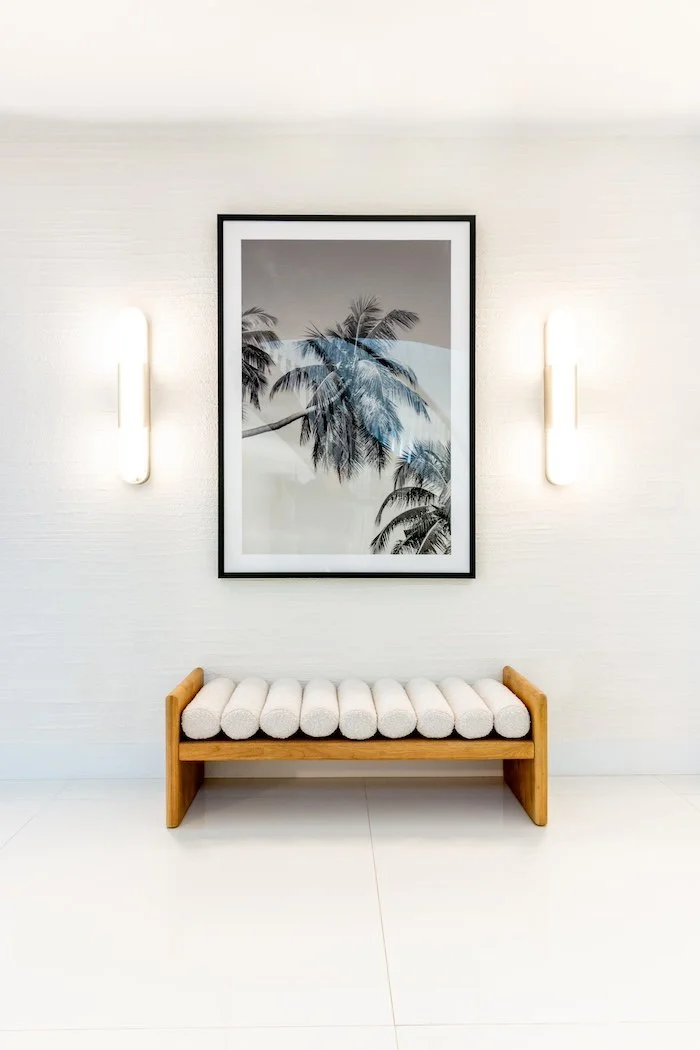
Waterfront homes often have an abundance of natural light, which can completely change how a space feels throughout the day. Light affects everything from paint colors and fabrics to flooring and artwork. Materials that look subtle in a shaded room can appear very different in direct sunlight. Consider how finishes will look throughout the day before making major selections.
Window treatments are another important consideration. They should provide privacy and light control when needed while still allowing you to take advantage of the home's views. For rooms with large windows or extensive glass, layered window treatments can provide flexibility without making the space feel closed off.
Choose Materials for Miami's Climate
Waterfront design is not only about aesthetics. Salt air, moisture, and strong sunlight can affect certain metals, wood finishes, fabrics, and other materials over time, making durability an important part of the selection process.
This doesn't mean every material needs to be designed for outdoor use. It means understanding where each material will be used and how much exposure it will have. A thoughtful interior designer can help evaluate finishes based on both their appearance and their practical performance, including appropriate fabrics, hardware, flooring, and furnishings for the conditions of the home.
Create a Natural Connection Between Indoor and Outdoor Spaces
Waterfront living often extends beyond the walls of the home. Patios, terraces, pools, docks, and outdoor kitchens can become part of everyday life and entertaining. So the interior and exterior spaces should feel connected rather than like separate environments.
Repeating materials, colors, textures, or design elements can help create that continuity. Furniture placement matters, too. Think about how people will move from the kitchen or living room to the pool or terrace. A well-planned transition makes outdoor spaces feel like an extension of the home rather than an afterthought.
Choose Coastal Materials Without Making the Home Feel Themed
A waterfront home doesn't have to look like a traditional beach house. Instead of relying on obvious nautical details, consider using natural textures, relaxed fabrics, warm woods, stone, and colors inspired by the surrounding landscape. These elements can reference the coastal setting without making the design feel predictable.
The goal is to create a home that feels appropriate to its location while still reflecting the homeowner's personality. A waterfront property can support everything from warm minimalism to a more collected or contemporary interior. The setting should influence the design, but it doesn't have to dictate the entire aesthetic.
Plan for Pool and Waterfront Living
A home with a pool, dock, or direct water access has different functional needs than a typical residential property. Consider where wet feet will enter the home, where towels and outdoor equipment will be stored, and how flooring will transition between indoor and outdoor areas. These decisions are easier to address during the planning stage than after the furnishings have been installed.
Durable, easy-to-maintain materials can be especially valuable in high-traffic areas. The goal isn't to make the home feel utilitarian. It's to create a space that can handle the way you actually live.
Use Color to Complement the Water
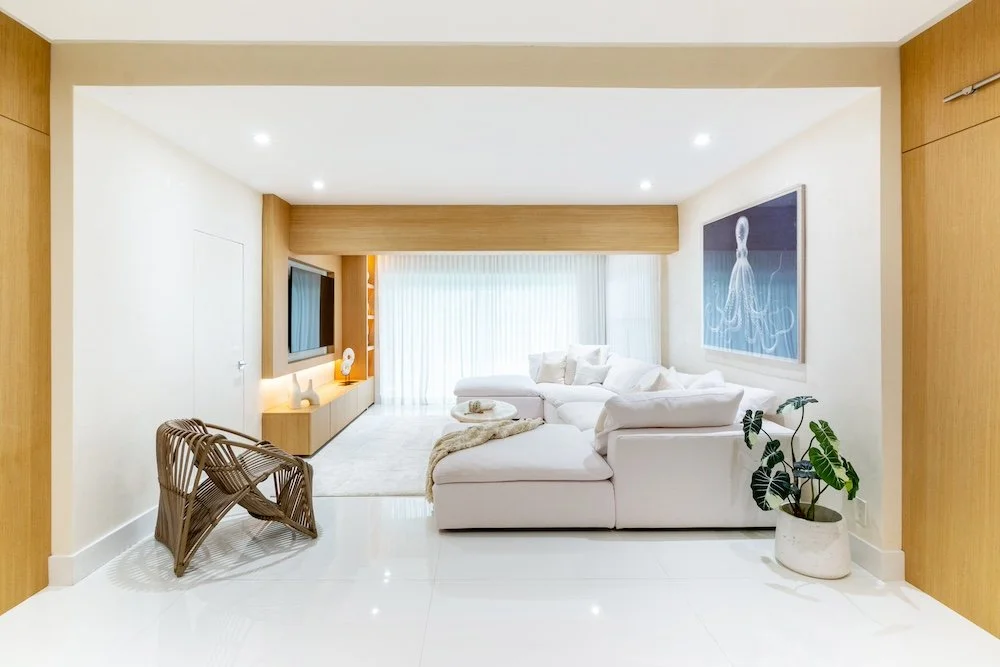
Color can help connect a waterfront interior to its surroundings, but there is no requirement to use blue and white. Soft neutrals, warm woods, sandy tones, greens, muted blues, and other natural colors can all reference the landscape. Stronger colors can also be introduced through artwork, upholstery, accessories, or other elements when they suit the homeowner's style.
Start with the light and views of the property rather than choosing a palette based solely on the idea of a coastal home. The surroundings can provide inspiration without limiting your options.
Think Carefully About Lighting
Natural light may be one of the home's biggest features, but artificial lighting still plays an important role. A waterfront home can look completely different after sunset, so layered lighting can help create warmth in the evening while supporting everyday tasks and entertaining.
Consider ambient, task, and accent lighting throughout the home. Decorative fixtures can also introduce texture or personality without obstructing the views that make the property special. Outdoor lighting deserves attention as well, particularly around pathways, terraces, pools, and landscaping.
Work With a Designer Who Understands Waterfront Properties
Waterfront design requires more than choosing finishes that look good beside the water. The property itself should inform decisions about layout, materials, furnishings, lighting, and indoor-outdoor living. A designer familiar with Miami homes can also help account for local considerations, including the differences between waterfront single-family homes, condos, and other property types. The design should make the most of the property's views and natural light while creating an interior that feels comfortable, personal, and practical.
Frequently Asked Questions
How do you design a waterfront home?
Start by considering the property's views, natural light, climate, and connection to outdoor spaces. Choose materials and furnishings that are appropriate for the home's environment while creating an interior that reflects your personal style.
What materials are best for a waterfront home in Miami?
Materials should be selected based on their location and exposure to humidity, sunlight, salt air, and everyday use. Durable fabrics, appropriate wood finishes, corrosion-resistant hardware, and easy-to-maintain surfaces can be useful in areas that experience greater environmental exposure.
How do you decorate a waterfront home without making it look coastal?
Use the surrounding landscape as inspiration rather than relying on traditional nautical decor. Natural materials, warm woods, subtle coastal colors, layered textures, and views of the water can create a sense of place without making the interior feel themed.
Ready to Talk Through Your Waterfront Home?
If you're designing or renovating a waterfront home in Miami, Eskae Interiors can help you develop a cohesive interior that responds to the property, your lifestyle, and the way you want to use the space. From furnishings and finishes to space planning, sourcing, and installation, our full-service interior design approach can help bring the project together from the initial concept through completion. Reach out today to book a consultation.