Minimalism has a reputation problem. For a lot of homeowners, the word conjures images of stark white rooms, absent of warmth, personality, or anything that resembles real life. Cold floors, empty surfaces, nowhere comfortable to actually sit. Warm minimalism is a different thing entirely. It is one of the design approaches we find ourselves returning to again and again, particularly for homes in Miami.
What Is Warm Minimalism?
Warm minimalism is an approach to interior design that borrows the structural principles of minimalism — intentional editing, uncluttered spaces, a strong sense of calm — and softens them through natural materials, layered texture, and a palette drawn from earth and nature rather than pure white and grey. It is not sparse. It is not cold. And it is not about owning as little as possible. It is about choosing well, placing things with intention, and letting a room breathe. The result tends to be spaces that feel both visually quiet and genuinely livable. Rooms that are easy to be in, not just easy to photograph.
The Core Principles of Warm Minimalism
Restraint, not emptiness
The foundation of any minimalist approach is editing. Being deliberate about what goes into a space and what stays out. In warm minimalism, this does not mean bare walls and empty corners. It means that every piece in a room has earned its place, whether through function, beauty, or both. Clutter is removed not to create a sterile environment but to give the things that remain room to be appreciated.
Natural materials as the primary source of warmth
Where cold minimalism relies on smooth, reflective, or industrial surfaces, warm minimalism draws its texture and depth from natural materials. Linen, wool, aged wood, stone, rattan, plaster, and leather. These materials do something that paint colors and furniture shapes cannot. They change with the light, age gracefully, and bring a sense of the organic world into an interior.
In practice, this might look like a linen sofa paired with a raw wood coffee table, a plaster wall finish instead of flat paint, or woven pendants over a kitchen island. None of these is a dramatic statement. Together, they create a room that feels grounded and alive.
A palette that is warm, not white
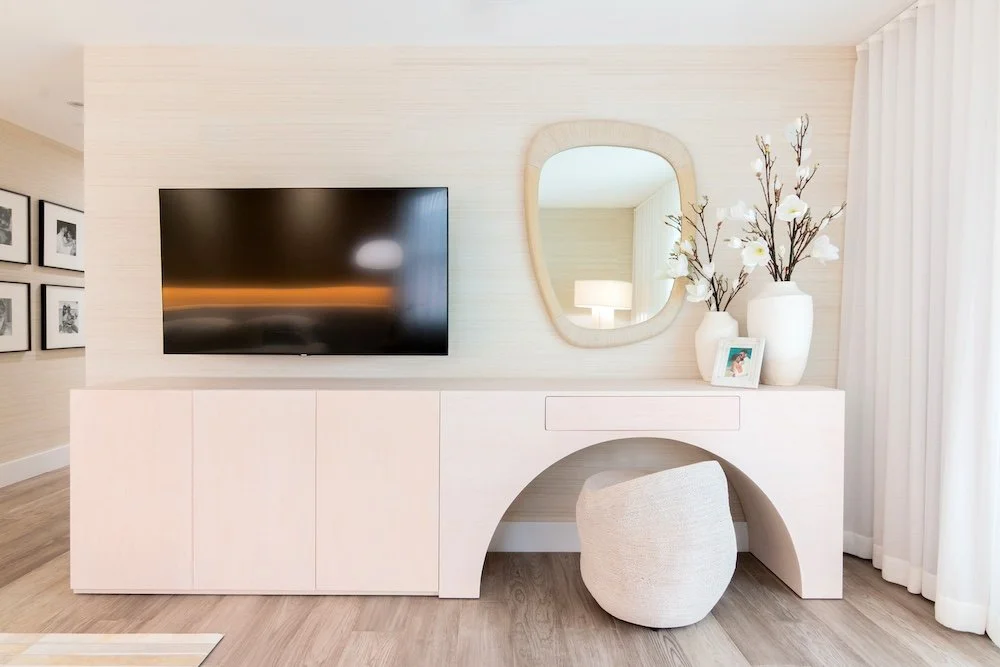
One of the clearest distinctions between cold and warm minimalism is color. Cold minimalism tends toward stark white, cool grey, and black. Warm minimalism works within a palette of sand, stone, clay, warm taupe, terracotta, and off-white. Colors that have some earth in them.
This does not mean the palette is complex. Warm minimalist interiors often use very few colors. The richness comes from how those tones shift across different materials and finishes. A linen cushion in the same sand tone as a plaster wall will read entirely differently because of texture and sheen.
Layered lighting
Lighting is one of the most important tools in any interior, and in warm minimalism, it does particularly heavy lifting. The goal is layered, warm-toned light. A combination of ambient, task, and accent sources that can be adjusted to change the mood of a room throughout the day. Overhead lighting alone produces flat, even illumination that works against the warmth a space is trying to achieve. Table lamps, floor lamps, wall sconces, and pendant lights used together create depth and shadow. That is what makes a room feel cozy and dimensional rather than clinical.
Purposeful, quality-forward furniture
Warm minimalism is not a style that benefits from fast furniture. Because the rooms are edited and the pieces within them are given room to be seen, quality and proportion matter more than in a denser interior. A well-made sofa, a solid wood dining table, a thoughtfully chosen armchair. These become the anchors of a room, and they need to hold up to that kind of attention.
Why Warm Minimalism Works Particularly Well in Miami
Miami has its own design logic, shaped by climate, light, and landscape. The sun here is intense, the air is humid, and the natural environment is always present just outside the window. Warm minimalism responds to all of that in a way that other styles do not.
The light. Miami light is bright and direct for much of the year. Cool, white-heavy interiors can feel washed out and harsh in direct southern sun. Warm tones and natural materials absorb and soften that light, creating spaces that feel comfortable rather than overexposed at midday.
The climate. Natural materials breathe in a way that synthetic ones do not, which matters in a humid climate. Linen, wool, wood, and stone all perform better over time in Florida conditions. They also tend to age more gracefully.
The indoor-outdoor relationship. Miami homes tend to have a strong connection to the outdoors. Warm minimalism, with its emphasis on natural materials and an organic palette, creates interiors that feel continuous with the landscape rather than sealed off from it.
The pace. Miami has energy, but the homes that feel best here often offer a counterpoint to it. Calm, considered spaces where you can genuinely exhale. Warm minimalism does that well. It is a style built around ease.
What Warm Minimalism Is Not
It is worth being clear about a few things warm minimalism is not, because the term gets stretched in different directions.
It is not the same as Scandinavian design, though there is an overlap. Scandinavian interiors tend to be cooler in palette and more functionalist in approach. Warm minimalism sits further toward the organic and the sensory.
It is not bohemian or maximalist. Warm minimalism edits carefully. It does not layer pattern on pattern or fill shelves to capacity. The restraint is deliberate and consistent.
And it is not a fixed look you can replicate from a shopping list. The best warm minimalist interiors are tailored to the specific home. Its light, its proportions, its architecture. They are not assembled from a mood board.
Is Warm Minimalism the Right Style for Your Miami Home?
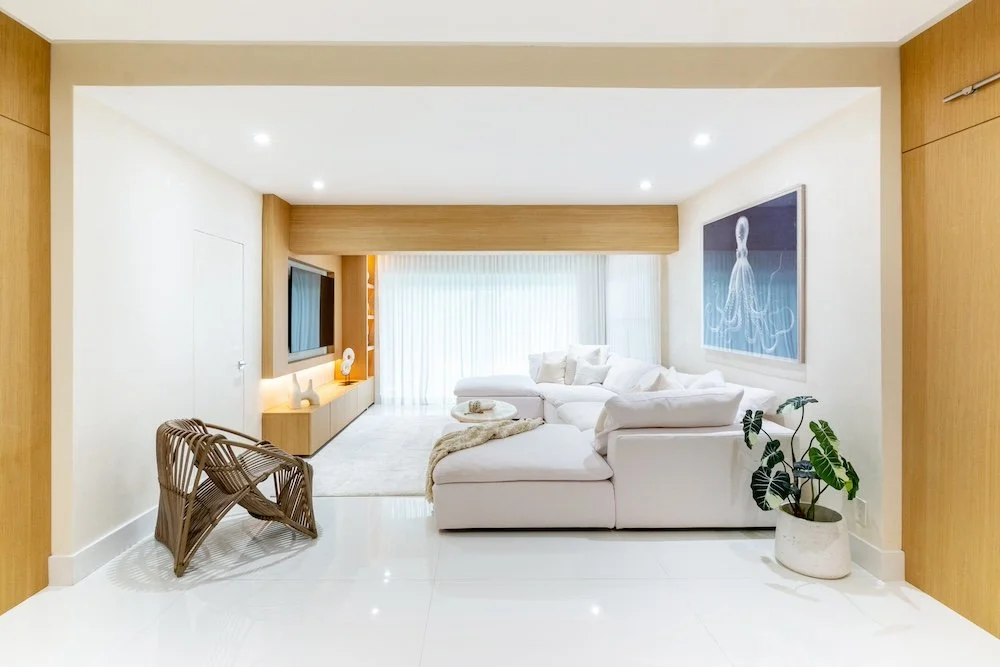
Warm minimalism tends to be a good fit when a homeowner wants their space to feel calm and uncluttered but does not want to sacrifice warmth or personality. It works across a wide range of home types, from a Coconut Grove home with older architecture and lush surroundings to a Miami condo where every square foot needs to work hard.
It is less suited to homeowners who love pattern, color, and visual complexity. There is no right or wrong there. Just different design languages.
The most useful question is not which style is currently popular, but which kind of space you actually feel most at ease in. If the answer involves words like calm, warm, natural, and uncluttered, warm minimalism is likely worth exploring.
Common Questions About Warm Minimalism
What is the difference between minimalism and warm minimalism? Traditional minimalism prioritises reduction and often produces interiors that feel stark or austere. Warm minimalism uses the same principle of intentional editing but introduces natural materials, warm tones, and layered texture to create spaces that feel inviting rather than empty.
What natural materials are commonly used in warm minimalist interiors? Linen, wool, aged or raw wood, stone, rattan, jute, leather, and plaster are among the most common. These materials share an organic quality that brings depth and warmth to a space without introducing visual noise.
Can warm minimalism work in a small Miami condo? Yes. The editing principle at the heart of warm minimalism makes it particularly well suited to smaller spaces. Fewer, better-chosen pieces in a warm, natural palette can make a condo feel considered and spacious rather than cramped.
Is warm minimalism a passing trend? The aesthetic has gained significant attention in recent years, but its underlying principles are not trend-dependent. Quality over quantity, natural materials, spaces that support rest and clarity. Homes designed around these ideas tend to age well precisely because they are not built around what is fashionable at a given moment.
Thinking About a Warm Minimalist Approach for Your Home?
At Eskae Interiors, we work with homeowners throughout Miami to design interiors that feel calm, considered, and genuinely livable. Whether that means a full-service redesign or a more targeted interior design consultation, we would love to talk through what that could look like for your specific space. Get in touch and let us take it from there.